Most care managers do not find out their safeguarding training is out of date until a CQC inspector is already standing in their office.
By that point, the damage is done. Safeguarding training requirements for care workers in the UK have become one of the most scrutinised areas of any inspection in 2026, and providers are being caught off guard more than ever.
If you are running a care home or managing a team of support workers, the question is not whether your staff need safeguarding training. The question is whether what they currently hold is actually good enough to protect your residents, your team, and your CQC rating.
In this blog, we are breaking down exactly what is required, what levels mean in practice, and how to make sure your team is never caught out again.
What Is Safeguarding Training in Health and Social Care in UK?
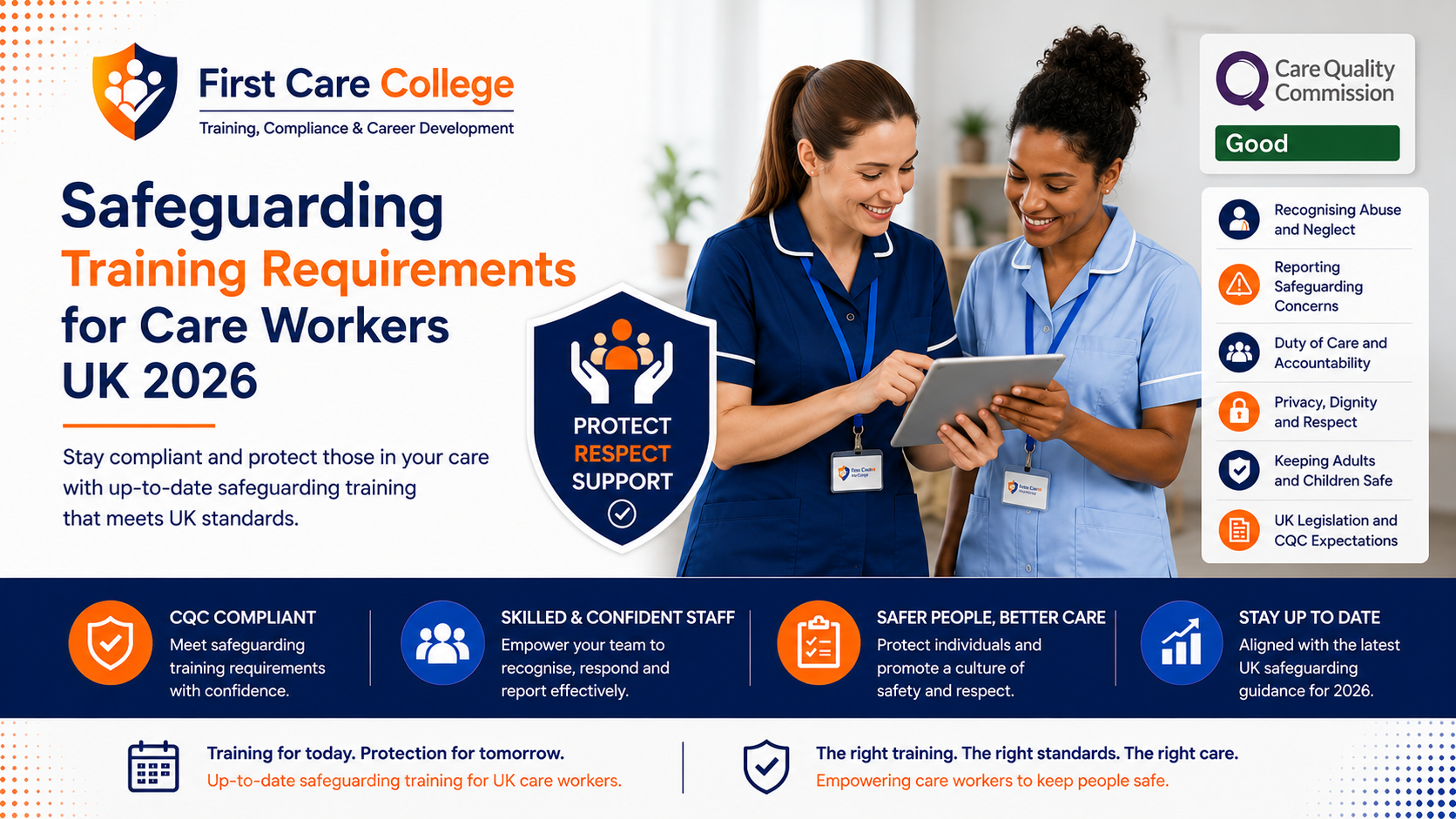
Safeguarding means protecting vulnerable adults and children from abuse, neglect, exploitation, and harm. For care workers, it means knowing how to recognise the signs, respond appropriately, and report concerns to the right people.
In the UK, safeguarding responsibilities are shaped by:
- The Care Act 2014
- The Mental Capacity Act 2005
- Statutory guidance from local safeguarding adult boards
CQC inspections assess whether your organisation has robust safeguarding systems in place, and staff training sits right at the centre of that assessment.
According to NHS England data, over 160,000 safeguarding enquiries were completed across England in 2022 to 2023 alone. That figure tells you everything about why regulators treat training compliance so seriously.
The Core Safeguarding Training Requirements for Care Workers in 2026
This is the section most blogs skip over, and it is the most important one. Here is what is actually required of care providers and their staff in 2026:
- All care workers must complete safeguarding training that is appropriate to their role and level of responsibility before they begin working unsupervised with vulnerable people
- Training must be accredited, up to date, and aligned with current statutory guidance including the Care Act 2014 and local safeguarding board frameworks
- Every member of staff, including agency workers and bank staff, must hold a valid safeguarding certificate that is current and on record
- Refresher training must be completed regularly, not just at induction
- Designated safeguarding leads must hold a higher level of training that reflects their decision-making responsibilities
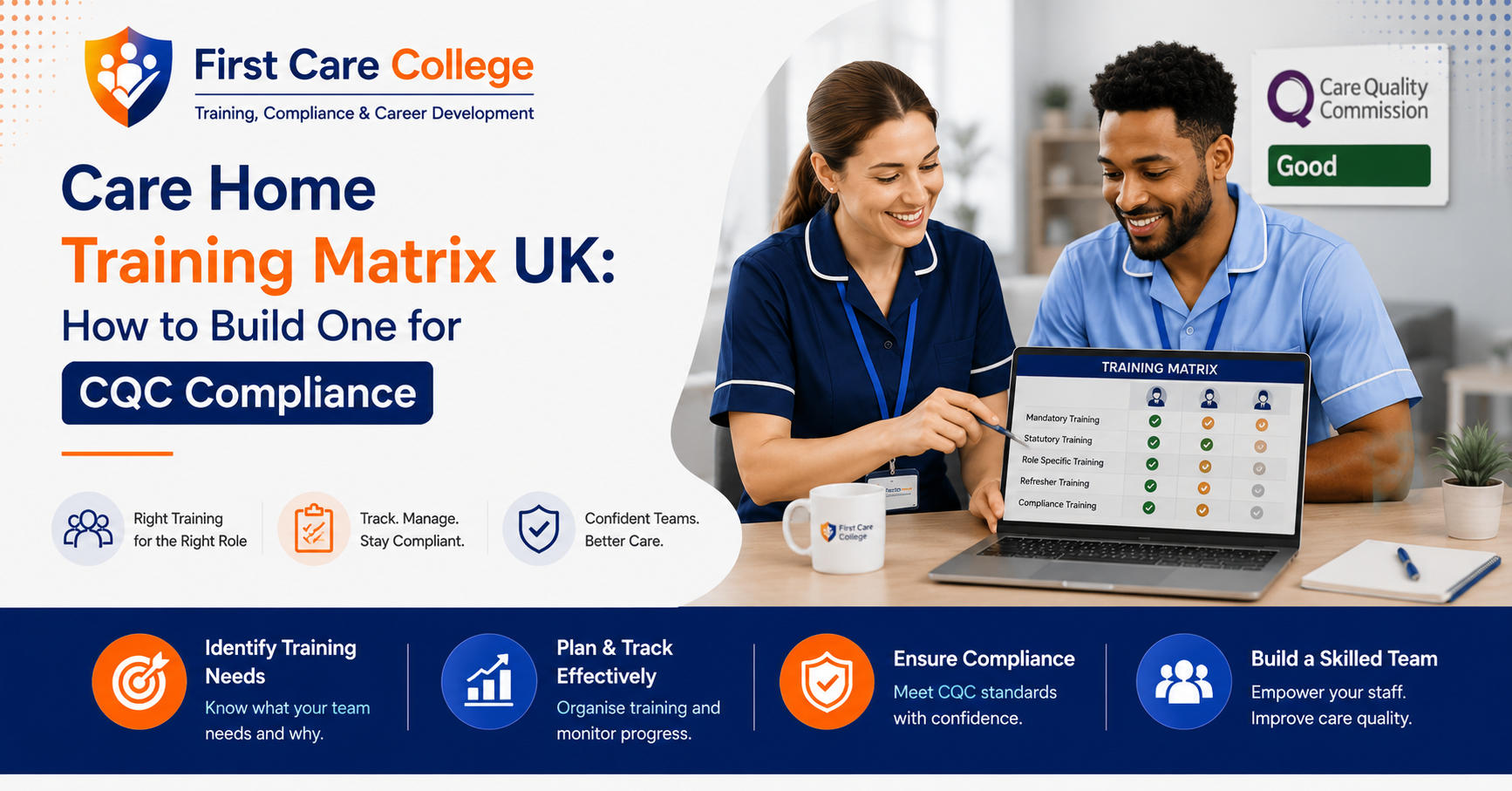
- Providers must maintain a full training matrix that evidences who has been trained, at what level, and when their certificate expires
- CQC inspectors will ask to see training records, and gaps in safeguarding training directly impact your Safe and Well-Led domain ratings
These are not recommendations. They are baseline expectations that every regulated care provider operating in England is held against during inspection.
If even one of those requirements is missing from your training records right now, your next CQC inspection is already at risk. First Care College helps care providers close those gaps fast with accredited, role-specific safeguarding training that inspectors expect to see.
Levels of Safeguarding Training Requirements for Care Workers UK
One of the most common sources of confusion for care providers is understanding which safeguarding level applies to which role. The three levels are not interchangeable, and placing the wrong training with the wrong staff member is itself a compliance risk.
Safeguarding Level 1
Level 1 is awareness-level training designed for all staff who work in or around care settings but do not hold a direct care role. This includes:
- Reception and administrative staff
- Kitchen and catering workers
- Housekeeping and maintenance teams
Training at this level covers the basic principles of safeguarding, types of abuse, how to raise a concern, and the duty to report. Every person employed in a regulated care environment should hold a current Level 1 safeguarding certificate as a minimum.
Safeguarding Level 2
Level 2 is where the majority of frontline care workers sit. It is designed for support workers, healthcare assistants, and anyone working directly with vulnerable adults or children on a daily basis. This level covers:
- Recognising specific indicators of abuse and neglect
- Understanding the referral and reporting process
- Working within multi-agency safeguarding frameworks
- Applying the Mental Capacity Act in everyday practice
- Responding safely and sensitively to disclosures
For care home staff, Level 2 is not optional. It is a core requirement, and CQC inspectors will look for it during every inspection.
Safeguarding Level 3
Level 3 is aimed at those with leadership or supervisory responsibility for safeguarding within an organisation. This includes care managers, senior carers, nurses, and designated safeguarding leads. At this level, practitioners develop competency in:
- Conducting and contributing to safeguarding enquiries
- Risk assessment and information sharing
- Section 42 enquiries under the Care Act
- Supervising and supporting staff through safeguarding concerns
- Leading multi-agency collaboration effectively
| Staff Role | Recommended Level |
| Kitchen, housekeeping, reception | Level 1 |
| Support workers, healthcare assistants | Level 2 |
| Senior carers, team leaders | Level 2 or 3 |
| Care managers, nurses, safeguarding leads | Level 3 |
How Often Does Safeguarding Training Need to Be Refreshed?
This is one of the most searched questions in the sector, and the answer matters more than most providers realise. The requirements are:
- Frontline care workers must complete safeguarding refresher training at least every three years as an absolute minimum
- Many NHS commissioners and local safeguarding adult boards require annual refreshers for direct care roles
- Designated safeguarding leads are expected to refresh their training annually in most local authority frameworks
- Refresher training is also required immediately following any significant safeguarding incident or major change in legislation or guidance
The safest approach in 2026 is to treat annual refresher training as the standard for all client-facing staff. Providers working with First Care College often build rolling annual schedules into their training plans, which keeps compliance consistent without the last-minute pressure before an inspection.
What Happens If Safeguarding Training Has Expired?
The consequences are more serious than many providers expect:
- CQC inspectors will flag expired certificates immediately during any inspection of training records
- Gaps across multiple staff members can directly result in a requires improvement rating under the Safe domain
- In serious cases where safeguarding failures are linked to inadequate training, enforcement action becomes a real possibility
- Agency and bank staff with expired certificates must not be deployed in direct care roles until training is renewed
- Commissioners and local authorities may suspend contracts where systemic training gaps are identified
Beyond the regulatory risk, there is a practical one. A care worker who has not refreshed their safeguarding knowledge may genuinely miss early warning signs of abuse or neglect. That has real consequences for the people in your care.
Common Safeguarding Mistakes Care Providers Make
Even well-managed care providers can make safeguarding mistakes that quietly create serious compliance risks. In many cases, these issues only come to light during a CQC inspection or after a safeguarding concern is raised.
Here are some common mistakes:
- Treating induction training as sufficient: Safeguarding completed during onboarding is just the starting point, not a permanent qualification.
- Failing to track expiry dates: Without a live training matrix, certificates expire silently and only surface during an inspection.
- Enrolling all staff at Level 1: This is one of the most common errors. Frontline care workers need Level 2 as a minimum, not Level 1.
- Overlooking agency and bank staff: Every person working in your setting must hold a valid certificate, regardless of their employment status.
- Using training content that no longer reflects current guidance: Legislation evolves. Training from five years ago may not meet 2026 standards even if the certificate has not expired.
How to Stay CQC Compliant With Safeguarding Training in 2026
Staying compliant does not have to be complicated. These steps will keep your team covered:
- Audit your training matrix now and identify every expired or mismatched certificate
- Assign the correct safeguarding level to every role across your organisation
- Build a rolling training schedule so refreshers happen automatically, not reactively
- Store all certificates centrally and link them to individual staff records
- Verify the safeguarding certificates of all agency and bank staff before deployment
- Choose an accredited training provider whose content reflects current CQC and statutory requirements
First Care College offers nationally recognised safeguarding training for care workers at Levels 1, 2 and 3, built specifically around UK care sector requirements.
Their flexible delivery options are designed to work around shift patterns and staffing pressures, making compliance genuinely manageable for busy care teams.
Get Your Team Trained Before Your Next Inspection
Do not wait for a CQC inspection to reveal gaps in your safeguarding records.
First Care College provides accredited safeguarding training for care home staff across the UK, with refresher options at every level.
Enrol your team today and go into every inspection with complete confidence.
Conclusion
Safeguarding training requirements for care workers in the UK are clearer than ever in 2026, but meeting them consistently is where providers continue to struggle.
The right level of training, delivered to the right people, refreshed at the right intervals, and evidenced properly is what separates a compliant, well-led care service from one that is one inspection away from serious trouble.
Getting this right protects your residents from harm, protects your staff from professional risk, and protects your organisation from regulatory consequences.
That is not a burden. That is what responsible care provision looks like.
Start Your Training With First Care College Today!